
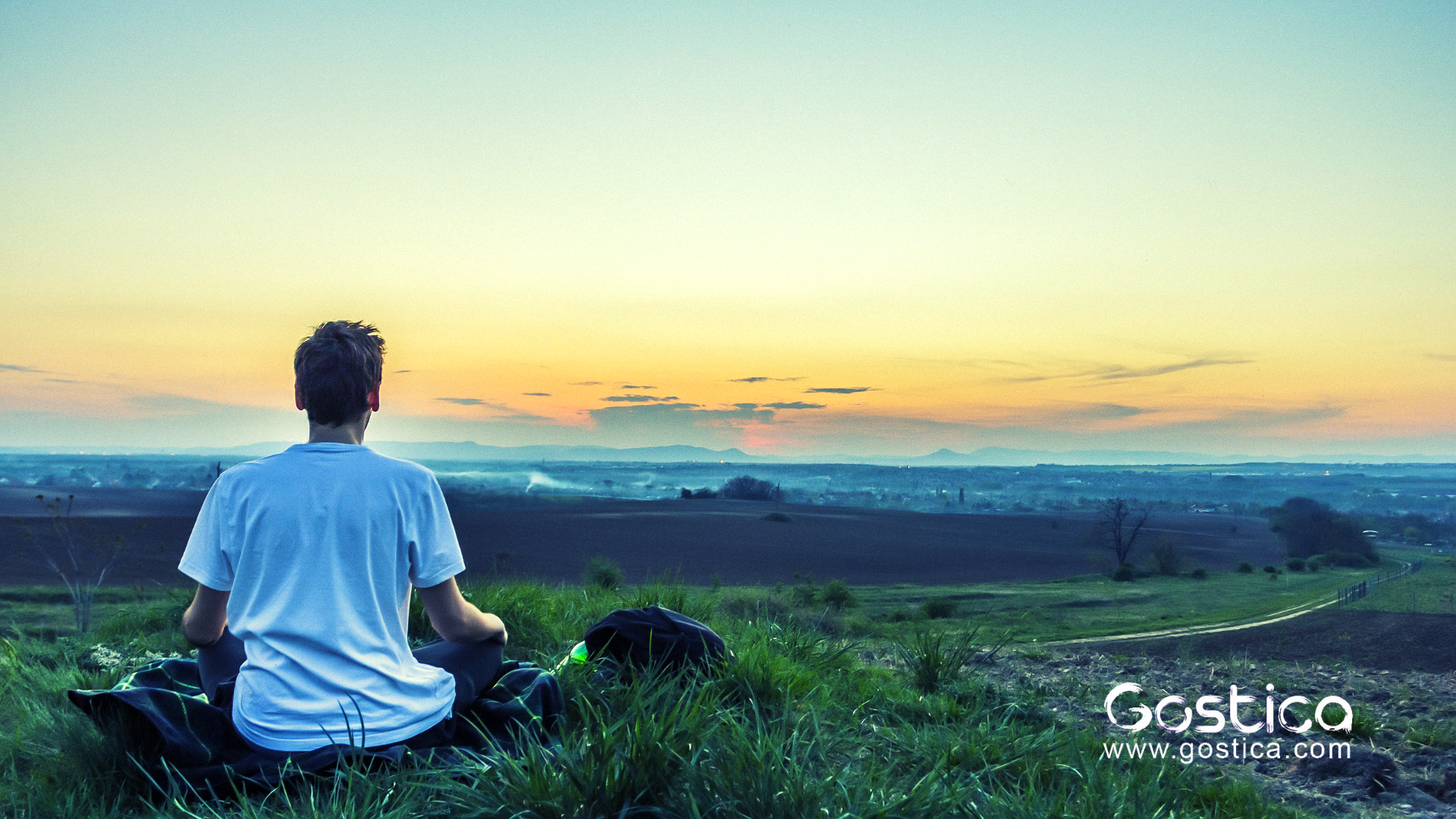
Learn this from water: loud splashes the brook, but the ocean’s depths are calm. ~Buddha
How would you handle no phone, no television, no reading, no books or magazines, no writing in a journal, no distractions, and no contact with the people who normally keep you engaged with the world outside your head for ten straight days?
How about no sex, no masturbation, and no killing even a mosquito that buzzes around your head after it happily sucks blood from your armpit?
If this sounds like heaven or hell to you – you’re right. It’s both.
A Vipassana retreat is not the way to dip a toe into hardcore meditation and spiritual contemplation. It’s more like diving, headfirst, into a frigid lake. It’s a shock to the system. It can make you question your sanity within the first hours you arrive, but if you stick it out, you just might discover that you find your sanity.
This is Vipassana
Vipassana is an ancient meditative tradition from Theravada Buddhism, which, arguably was heavily influenced by Vedic traditions in India which preceded it. Modern teachers of Vipassana argue, as did its earliest progenitors, that it is non-sectarian and for everyone to benefit from, no matter their religion.
Translated from the Pali language, Vipassana means “clear insight.” It is one of two mental practices cultivated by Theravadists, the other being Samatha.
Vipassana distinguishes itself from other types of meditation, including Samatha, as the ability to be able to see exactly what is happening as it happens, without ego, and without veils. Samatha translates roughly to mean “concentration.”
When you practice Samatha meditation you use a single word, object or mantra to make your mind singularly focused. This is said to bring the mind to a state of calm and focused rest. Many of the forms of meditation we practice today are essentially Samatha at their core.
Vipassana differs slightly. Concentration is used as a tool to see how things really are. In many forms of meditation, concentration is the goal. In Vipassana concentration is simply used to strip away the bullshit.
This is achieved most often by observing bodily sensations. It is taught that learning to observe all sensations in the body, whether they are unpleasant or desirable, and simply observing them without reaction can teach us to do the same with things that happen in life – and thus we see clearly.
Without going into a full Jungian diatribe about how we all see through false lenses created by our subconscious and its previous experience, just know that what you experience now is rarely a true picture of reality as it is.
The ego identifies with the body and its sensations, but this also creates aversion and craving. Vipassana does not aim to teach us to ignore our emotions, but to embrace them with “clear insight” so we can choose how to act, not react to life.
Since all emotion is attached to a physical feeling, we can learn how to put the ego in its place by simply learning to observe the messages of our bodies without reacting to them.
Vipassana practiced in everyday life, without the hardcore and complete silence of a retreat, can still be extremely difficult, as it tends to bring to the surface outdated ways we have of interacting with the world.
If you pay just the smallest amount of attention, you will notice that thoughts of fear, jealousy, rage, and insecurity can arise when nothing in the outside world has directly triggered them. The ego becomes an “entity” inside us, with its own voice (often negative) which clouds our judgment of reality.
The ego is so hard to quiet because the dissolution of it can feel like a psychological suicide – it is the literal death of a part of ourselves we may have identified with since we were very small children.
If you want to get the first glimpse of the ego, it usually sets you up with thoughts like these:
“I will only be happy when _________ happens.”
“I can only experience love if ________ person gives me attention.”
“I will only achieve my goals by doing _________ (morally reprehensible thing.) I can’t achieve what I want in the world by being honest, true, and loving.”
People shy away from identifying these thoughts because they don’t know what to do with them or where they are coming from.
A Vipassana retreat not only causes you to identify these thoughts but to go deeper into them. When you start to notice the craving and aversion in little things like an itch on your nose, or the ache in your back, something else reveals itself, and often the architect of these thoughts comes out from behind the curtain.
10 Days of Mind Surgery
By conducting “mind surgery,” during a Vipassana retreat of any length, you start to notice why these sensations are triggered. There are often a few surprises. You can be struck with a very powerful emotion that seems to be triggered by something very small and insignificant, but that trigger will pull up memories of an experience or trauma which likely made the negative ego stronger, and more entrenched.
The schedule for a Vipassana training can be intense. You are often expected to rise in the early morning, around 4 or 5 AM. You will go straight into meditation for an hour, followed by a brief breakfast – which is often barely enough to squelch the grumbling in your stomach – yet another distraction to overcome on the meditation cushion.
Then you’ll have a group meditation or a yoga session, at which time you are not allowed to talk to anyone else who is there. Then you’ll meditate again, sometimes with instructions from your teacher, or not.
This will be followed by your first “meal” of the day, that for most of the Western world is a drastic change from how they eat every day. You’re giving your body food to sustain it, not feed its cravings, so lentils, vegetables, fruit, and water may be all you eat for the duration of the retreat.
These foods tend to calm the mind and make it easier to concentrate. Sugar, caffeine, and all the processed foods we normally eat bolster the negative ego. You will also be instructed to eat even as if it is a meditation. Since many of us use food to quash emotions we don’t want to feel, even mealtimes can be extremely difficult.
Flabbergasted
When you start to get into the swing of things, and you’ve realized some of the tricks of the ego that cloud your insight, you’ll start to feel empowered.
This won’t come until you’ve had tears, pillow punching fits, and perhaps even mental and emotional fall out like you’ve never experienced in your entire life. It will feel like the “real you” is starting to emerge, and instead of kicking yourself for signing up for a crazy retreat like this, you’ll thank your higher self for guiding you there.
But then. . . you’ll be flabbergasted.
Just when you think the ego is giving up without that much of a fight, it kicks in – with a vengeance. The basic structure of the negative ego is based on lack and fear. It can’t be positive, not for long.
So, when it (the entity you’ve created) senses your new-found freedom, it will attempt to sway you from this path. The only thing to do is to dissolve its force in you to the point where its influence becomes “zero.”
This process takes time. It can feel like an absolute war in your mind for a while, and it can be tiring. However, the more awareness or “clear insight” you have, the faster you can allow the dissolution to occur.
And then, the hell is over. If nothing else, it gets easier to see when the ego is up to its old tricks again, and you can pat it on the head like a small child, and say, “there, there, we’re not playing that game anymore.”
Gentle But Thorough
Vipassana is meant to be gentle but thorough. It’s going to clean out your egoic nonsense like a roto-rooter. But once you see the truth of impermanence, and the illusory nature of “reality,” you can become a more selfless, loving individual, ready to see the world clearly.
When you return from a Vipassana retreat, you’ll feel renewed, if not gutted, but you’ll have new tools to return to anytime the illusion starts to get too loud, noisy or scary.
About the Author
Christina Sarich is a staff writer for Waking Times. She is a writer, musician, yogi, and humanitarian with an expansive repertoire. Her thousands of articles can be found all over the Internet, and her insights also appear in magazines as diverse as Weston A. Price, Nexus, Atlantis Rising, and the Cuyamungue Institute, among others.
She was recently a featured author in the Journal, “Wise Traditions in Food, Farming, and Healing Arts,” and her commentary on healing, ascension, and human potential inform a large body of the alternative news lexicon. She has been invited to appear on numerous radio shows, including Health Conspiracy Radio, Dr. Gregory Smith’s Show, and dozens more. The second edition of her book, Pharma Sutra, will be released soon.
This article (Vipassana – A Brutal but Enlightening 10 Days of Silence) was originally created and published by Waking Times and is published here under a Creative Commons license with attribution to Christina Sarich and WakingTimes.com. It may be re-posted freely with proper attribution and author bio.
geinoutime.com
그들은 정말 본 적이 없습니다 … 감히 공격을 주도한 명나라 군대.
thebuzzerpodcast.com
제122장: 덕으로 사람을 설득하다
k8 カジノ 評判
この記事は本当に目から鱗でした。感謝します。
nikontinoll.com
그러나 Zhu Zaimo는 무언가를 생각하는 듯 침묵에 빠졌습니다.
I appreciate how you’ve explained things so clearly. It really helped me understand the topic better.
The prose is as smooth as silk, making hard to understand topics feel like a gentle caress to my mind.
The voice shines through The writing like a beacon, guiding us through the darkness of ignorance.
geinoutime.com
앞선 논문들에 대해 이야기하자면, 그들은 세상의 이론적인 지식을 관찰하는 것에 더 가깝습니다.
veganchoicecbd.com
처음에 그는 이것이 의도적으로 왕자의 배후 계획일지도 모른다고 생각했습니다.
押忍!番長2(自动转)
素晴らしい内容と素敵な書き方で、非常に楽しめました。
animehangover.com
“왜 유죄를 인정해야 합니까? 저는 무죄입니다!” Zhu Houzhao가 화를 내며 말했습니다.
Adding value to the conversation in a way that’s as engaging as a flirtatious wink. Can’t wait to hear more.
mikaspa.com
Hongzhi 황제는 얼굴을 들었습니다. “무슨 소리 야?”
ミリオンゴッド-神々の凱旋
このブログはいつも私に新しい視点を提供してくれます。感謝しています。
bestmanualpolesaw.com
Fang Jifan은 도울 수 없었지만 “그 종이에도 내 이름이 서명되었습니다! “라고 말했습니다.
슈가 러쉬 X마스
양씨, 군에서 참으로 존경스러운 분, 이 분은… 실은…
문 프린세스
Hongzhi 황제가 Xishan Medical College에 도착했을 때 Liu Jian의 울부 짖는 소리를 들었습니다.
I found myself completely engrossed by your post. The richness of the content, combined with your eloquent writing style, made it an exceptional read. Your dedication to quality content is evident and greatly appreciated. Thank you for the enlightenment.
문 프린세스 100
Fang Jifan도이 사람이 5 명과 6 명인 것을보고 놀랐습니다.
판다스 포춘
하지만 지금은… 고개를 들었고 마음속 깊은 곳에서 저절로 뿌듯함이 솟아올랐다.
문 프린세스 100
그 직후… 도시에서 산발적인 전투가 시작되었습니다.Jin Yiwei는 왕자가 실제로 학생들과 싸우기 시작했다고 비밀리에보고했습니다.
슬롯 머신
한 나라의 영주라도 속수무책이 많다!
황제 슬롯
그들은 지구상의 지옥이 된 타타르 진형으로 다시 도망쳐야 했습니다.
777 슬롯
그들처럼 눈에 띄지 않는 사람들이 하위 현자가 될 수 있습니까?
I always learn something new from The posts. Thank you for the education!
The take on hard to understand topics is like a smooth ride in a luxury car—comfortable, yet exhilarating.
Making hard to understand topics accessible is a gift, and you have it. Thanks for sharing it with us.
The unique viewpoints in The writing never fail to impress me. Insightful as always!
슈가 러쉬 X마스
Fang Jifan은 “그럼 나중에 무슨 일이 있었는데 왜 나중에 말하지 않았나요? “라고 분노했습니다.
Glad I stumbled upon this article. It’s like finding a $20 bill in a pair of old jeans.